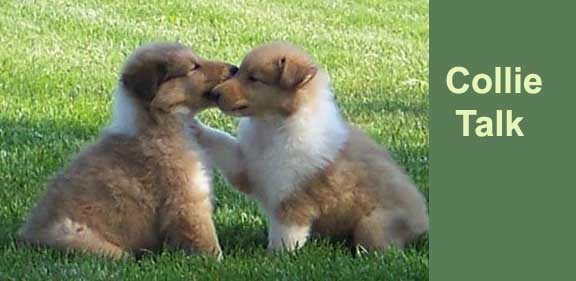
This little girl howled when she came up to the garden hose. I wonder what that was about! She's only
5-weeks-old so she has plenty of time to learn.
Tuesday, May 22, 2012
Thursday, January 26, 2012
I hope these pictures are clear and that the captions can be read. I decided to give the puppies a basket to play with before trying to put them all in it to take a group picture. They had fun with it, thats evident! I took pictures as they played and investigated. But when the little blue girl, Mogul, was trapped under it, I decided that was enough "basket time".
Monday, December 19, 2011
Calendars 2012
Our new calendars are here! I was able to create full-sized wall calendars this year.
Having collies is such a joy for me, hope it shows in the pictures!
All of the puppies are from Goldleaf Collies. Some pictures were sent to me of puppies who are older. January is Bella, now in Florida, looking like a model! June is Bear, in North Carolina. He actually catches fish. December is Misty, who is our girl and a Pearl/Scout daughter. Looking forward to her puppies someday.
All of the other pictures were taken here, at my house.
Here is a link to see the pictures.
http://www.goldleafcollies.com/LatestNews.html
Friday, June 17, 2011
Dog video posted after this Story:
I wasn't sure how to place a video in a post, but it worked. So, here, I'd like to tell you that I've seen this so many times that I think I know all of the words! I've laughed every time too.
My grand daughter can imitate the dog. She makes me laugh every time she does it. Sometimes we say, "Nope, not kidding" just to giggle again!
What a great thing this man did. Sharing a fun moment is so refreshing.
My grand daughter can imitate the dog. She makes me laugh every time she does it. Sometimes we say, "Nope, not kidding" just to giggle again!
What a great thing this man did. Sharing a fun moment is so refreshing.
Monday, November 16, 2009
Puppy Tips
Final Puppy Tips For A Trouble-Free Welcome Into Your Home
As a puppy owner, before you can properly come to grips with the amount of information regarding feeding, training, and socializing your dog, let us touch on your new pet's first night in his new home.
This experience will be a frightening one for the dog. Do not smother him with love and attention during his first hours. Rather, it is a good practice to have his area already set up before he comes into the home and place the dog in it and let him investigate as soon as you get him inside.
His bed, water bowl, and plenty of papers are the basic elements that will be necessary. Besides these necessities, a toy or two, and a lot of peace and quiet will be all he needs for a while. If you wish, sit down quietly nearby to help him as he orients himself.
No Feeding Please
Feeding should be left for a few hours until he has become somewhat used to his surroundings. Between his ride home and the stress of his new life opening before his eyes, chances are good he will develop a sour stomach from any food offered immediately. If after some time, he seems hungry, offer him a light meal.
Limit The Affection
Don't overload him with attention right away. There will be many years ahead when he will and appreciate your love and care. Right now, it will only serve to confuse him. Let the family meet the puppy easily, one at a time perhaps, and after a few gentle pats, leave him rest.
Avoid Injuries
Keep playtime short for the first few weeks, making sure the little dog is not allowed to tire himself. He will soon become a family member and will love to play and roughhouse in time. But for the time being, he is a baby and needs plenty of sleep just like his human friends, as well as a safe play area.
Do Not Be Overwhelmed
While all puppy care rules and recommendations may seem difficult at first, it is good to remember that your dog will be learning these things whether or not you know what is happening. It is wiser and easier finally, to have him learn correctly from the very start than to try to undo bad habits that have been taught by improper handling or lack of training.
Considering that your new puppy will we hope be spending at least the next decade in close contact with you, your family, your neighbors and friends, I hope that you will agree that following proper puppy care guidelines will be well worth the effort. Someday, someone observing your dog look at him with admiration and respect because of his radiant good health, his obvious good care, and his delightful manners.
Content provided by Shawn Plant of Oh My Dog Supplies, check out our awesome assortment of dog seat covers online.
Monday, August 17, 2009
Article on choosing a dog
What to Consider When Picking a New Dog When You Have Children
Dogs are great and often become our “children” for those of us who don’t have kids or whose kids have already grown up and moved out of the house. But when you have small children at home, you have to seriously consider the type of dog that you bring home because not all dogs get along with all children. However unintentional it may be, dogs can hurt children and children can hurt dogs, so it’s a good idea to look at the breed of dog and the age of your child before bringing home a new pet. The main thing that dogs and small kids have in common is that they are each unpredictable.
Even small dogs can have bad temperaments. Sometimes certain breeds are more nervous by nature and don’t handle the teasing or roughhousing that children can bring. The following breeds of dogs are not recommended if you have young kids (under age 12) in your household: Yorkshire terrier, schnauzer, chow, pekingese, lhasa apso, akita, afghan hound, shih tzu, and basenji.
Some dogs are naturally bred to be herders and work well with children under 12 because they herd the children and enjoy the interaction with them. You just have to be careful that you don’t choose a herding dog whose instinct while herding is to nip. Terriers are the most common herding breed. Among those dog breeds recommended for children under 12 are the Australian terrier, welsh terrier, collie, golden retriever and irish terrier.
With children above age 12, most breeds work well with them and are well suited as household pets. They are loving and protective companions while still being playful enough to want to interact with your kids. These breeds include nearly all retrievers and herding dogs, Dalmatians, English cocker spaniels, border collies, and pembroke welsh corgis.
If you have children under six in the household, you should avoid large dogs that have a history of being aggressive such as rottweilers, pit bulls, and german shepherds. Even if they don’t bite your children, they are large, high-energy dogs that could knock your children over, potentially hurting them.
Dogs bite children (and adults) out of either fear or aggression. Young children haven’t yet learned boundaries or consequences and often pull on a dog’s tail or hit a dog too hard, causing the pet to respond inappropriately. To solve this problem, you should teach your children about their behavior around the dog and train the dog to understand that you won’t tolerate aggression against the child.
Now we’re going to focus on some specific problems that arise between dogs and children and how to resolve them:
• If your dog begs from the table or steals your child’s food, simply keep the dog out of the kitchen during dinner and keep an area just for him with treats and his own food.
• If your dog jumps up on the kids, teach the kids to raise their knees and jump their hip toward the dog when he jumps. Next, train your dog to not jump on anyone – adult or child.
• If the dog knocks your child down, separate the dog from the child before he jumps if you see that he’s getting excitable. Teach your child to calmly command the dog to “sit” when he starts to lunge toward him.
It’s just a general good rule not to leave your small children along with the family pet. Even the cutest most wonderful dog in the world can have a bad day if provoked. Dogs and children can form special long-lasting relationships if each understands his role and the behaviors that need to be exhibited around the other.
rticle provided by Nick Johnson of www.pet-super-store.com: Find great deals onElevated Dog Feeders and Dog Beds
Subscribe to:
Posts (Atom)